Made In Great Britain

Direct from our factory

Product Test Results

All test results published

Expert Technical Advice

Call or chat with our team

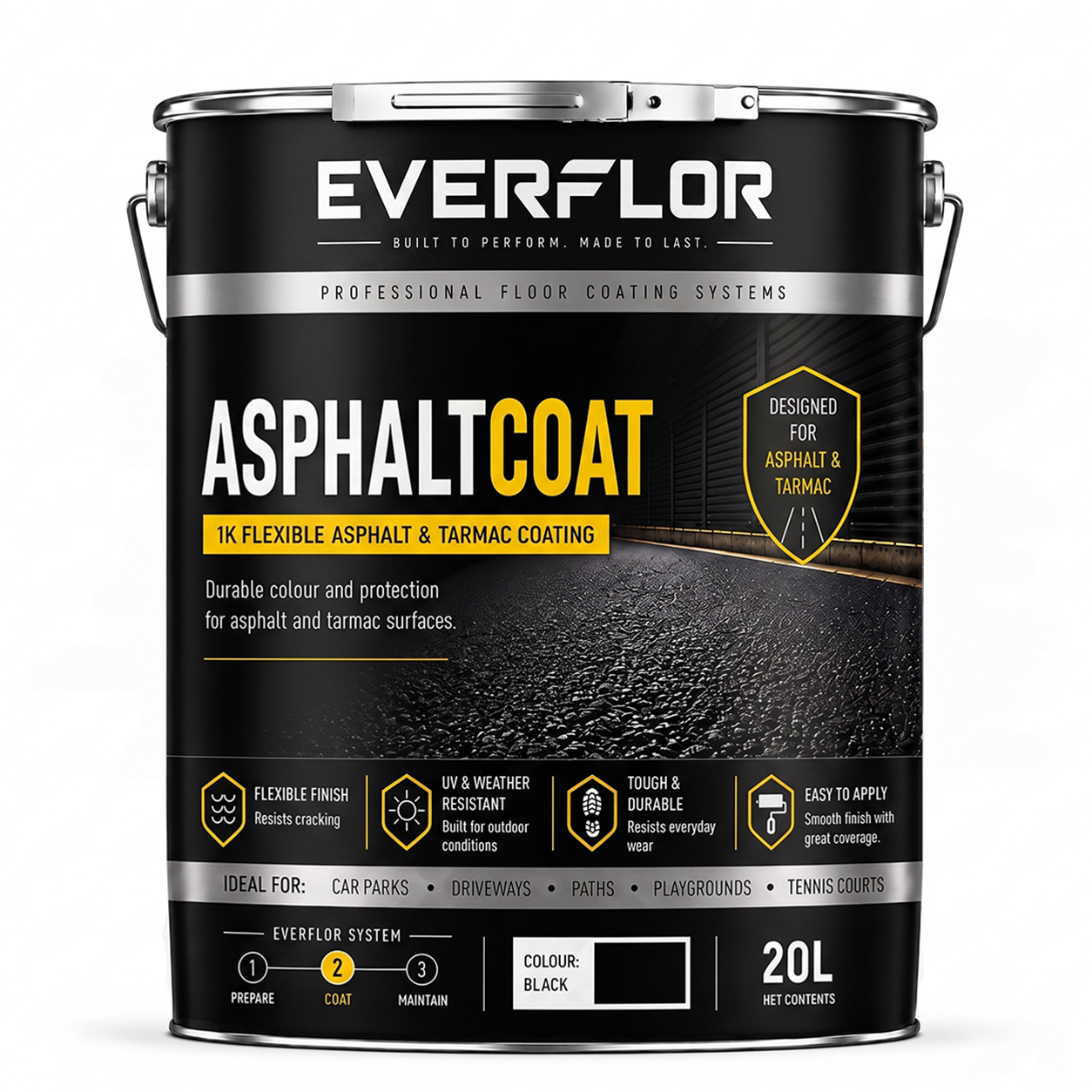
A 20L metal can of Everflor Asphalt Coat 1K Flexible Asphalt & Tarmac Coating in Black, shown on a clean white background.
Brand:EverFlor

EverFlor - AsphaltCoat

From 432,00 złUnit price (86,40 zł  per  l)
  • Black (RAL 9005)
  • Red Tarmac (RAL 3009)
  • Mid Green (RAL 6002)
  • White (RAL 9003)
  • Safety Blue (RAL 5015)
Asphalt Compatible

Flexible for Tarmac

UV Stable

Fade Resistant Coating

Water Based

Low Odour Formula

Quick Drying

Touch Dry in 2-4 Hours

Damp Tolerant

Apply to Damp Surfaces

Breathable Film

Lets Trapped Moisture Escape

A 20L metal can of Everflor Asphalt Coat 1K Flexible Asphalt & Tarmac Coating in Black, shown on a clean white background.
Brand:EverFlor

EverFlor - AsphaltCoat - Anti-Slip

From 501,00 złUnit price (100,20 zł  per  l)
  • Black (RAL 9005)
  • Red Tarmac (RAL 3009)
  • Mid Green (RAL 6002)
  • White (RAL 9003)
  • Safety Blue (RAL 5015)
4.9
SummitSeal - TarmacCoat - Tarmac Sealer & Restorer - Anti - Slip - Everest Paints
Brand:SummitSeal

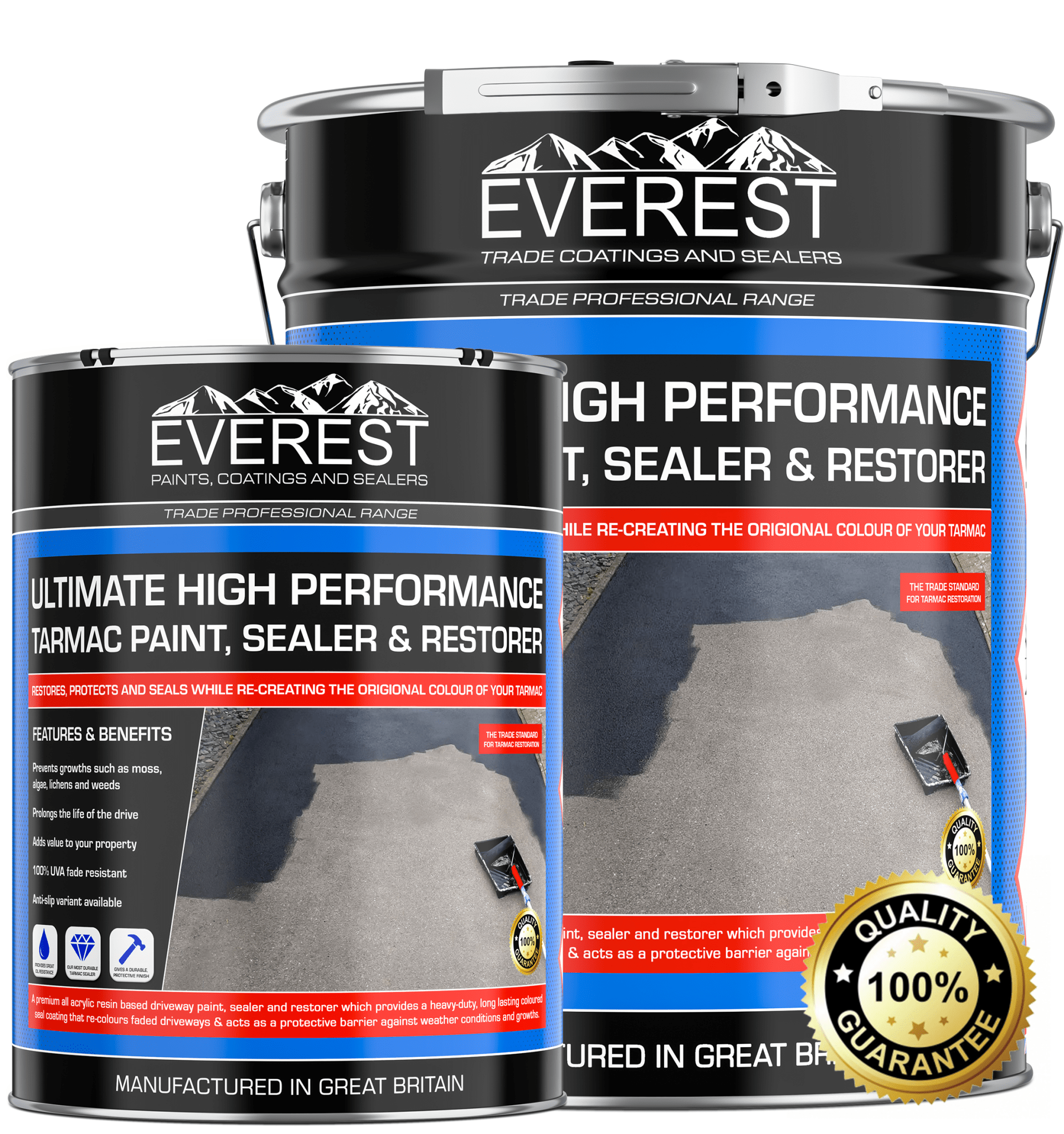
SummitSeal - TarmacCoat - Tarmac Sealer & Restorer

From 432,00 złUnit price (86,40 zł  per  l)
  • Black Tarmac
  • Red Tarmac
SummitSeal - TarmacCoat - Tarmac Sealer & Restorer - Anti - Slip - Everest Paints
Brand:SummitSeal

SummitSeal - TarmacCoat - Tarmac Sealer & Restorer - Anti-Slip

From 504,00 złUnit price (100,80 zł  per  l)
  • Black Tarmac
  • Red Tarmac

Re-Surfacing and Recoating Systems for Worn Asphalt and Tarmac

Duty classification:
Light to Heavy Duty
Suitable substrates:
Asphalt Tarmac

System Overview

Asphalt wears from the top down. Sunlight and weather harden the binder, the black colour fades to grey, and fine aggregate begins to work loose. Re-surfacing with a coating renews that top layer while the asphalt beneath stays in place.

The products in this range are acrylic coatings and restorers. They are applied as liquids over the existing surface and dry to a coloured, sealed finish. They add no structural thickness, and they are not screeds or levelling compounds.

AsphaltCoat is a single-pack, water-based acrylic coating for asphalt, tarmac and concrete. It is used to colour, protect and waterproof hard standing. TarmacCoat is an acrylic restorer, formulated with a heavy-duty acrylic resin, that rejuvenates, colours and seals tired tarmac.

Both are made in standard and anti-slip versions. The choice between the two products depends on the aim. One restores a weathered surface as tarmac. The other applies a defined colour for bays, walkways or play areas.

Suitable Substrates & Surface Preparation

These coatings are for asphalt and tarmac that is structurally sound. The surface should be firm underfoot, free from soft spots, and stable under the traffic it carries. A coating follows the surface it is applied to, including its faults.

Clean the whole area before coating. Remove moss, weeds, leaf litter and soil, then sweep away loose stone and dust. Oil and fuel stains should be treated, since contamination prevents adhesion. Allow the surface to dry fully after washing.

Carry out local repairs first. Potholes, broken edges and open cracks should be filled and allowed to cure before the coating goes over them. Low areas that hold water should be corrected, because a coating film cannot change the level of a surface.

New asphalt needs time to weather before it is coated. The oils in a fresh surface interfere with adhesion. Follow the product guidance on the age of surface each coating accepts.

Performance Characteristics & Limitations

AsphaltCoat lifts dull, weathered tarmac to an even matt colour. Its resistance to UV and weathering means the shade resists fading. The film is flexible, so it moves with the asphalt beneath it instead of cracking away. It is also breathable.

Two coats of AsphaltCoat give a matt, smooth colour with measured slip resistance. It is applied by brush, roller or spray. The fast recoat window allows a full two-coat job to be completed within a single working day.

TarmacCoat provides a durable barrier against fretting, oil stains and weed formation. It offers UVA resistance and protects against aggregate loosening in high-traffic external environments. Fretting and loosening aggregate are the usual first signs that an ageing tarmac surface is failing.

The limits follow from what these products are. A coating does not fill potholes, bridge open cracks or level an uneven surface. It does not strengthen asphalt that is breaking up from below. Coated surfaces wear under traffic and need recoating in time, sooner in turning areas and entrances.

Internal vs External Considerations

Nearly all of this work is external. Car parks, yards, paths, courts and playgrounds are open to sun, rain and frost throughout the year. TarmacCoat is described for high-traffic external environments, and AsphaltCoat is resistant to UV and weathering.

Weather governs application. Coat a dry surface in dry conditions, with no rain expected until the film has dried. Water-based coatings dry more slowly in cold or damp air, so allow longer between coats and before reopening to traffic.

Strong sun brings its own difficulty. A hot, dark surface can dry a coating before it has flowed out. Application early or late in the day avoids that in summer.

AsphaltCoat is also suitable for concrete, which lets a single colour scheme continue across mixed hard standing. Covered asphalt areas can be coated too, with ventilation provided so the water-based film can dry.

Selection Guidance & When to Specify Alternatives

Specify a restorer where the aim is to return tired, grey tarmac to a uniform sealed finish and slow further fretting. Specify a coloured acrylic coating where the surface needs defined colour. AsphaltCoat is used to mark out parking bays and pedestrian walkways, to colour code hazardous areas, and for court and playground colours.

Consider the anti-slip versions for slopes, ramps and pedestrian routes that stay wet. Check the product data for each version before specifying it.

Where the surface has holes, start with the Asphalt Pothole & Hole Repair range. Where it has cracks or open joints, start with the Asphalt Cracks & Joint Repair range. Coating comes after those repairs.

Where the asphalt is rutted, sunken or broken across wide areas, a coating is not a re-surfacing method. That condition requires a new hot-laid wearing course or full reconstruction by a surfacing contractor. The products in this range are coatings, not screeds or overlays.


Explore Car Park and Roadway Paints

Asphalt Re-Surfacing & Screeding FAQs

View All FAQ's

Technical Guidance & Application Advice

Re-surfacing worn asphalt with a coating succeeds when the surface beneath is sound, clean and dry. The guidance below covers how to judge whether tarmac can be recoated and how a restorer differs from a coloured coating. It also covers coats, application methods and anti-slip versions, and the point at which a surface needs relaying instead. Product statements are taken from the product data.

Can worn, faded tarmac be recoated, or does it need relaying?

It depends on what has worn. Fading, a dry grey appearance and light loss of fine stone are surface conditions, and a coating or restorer addresses them. Ruts, sunken areas, widespread potholes and block cracking are structural conditions. A coating follows those faults and does not correct them. Walk the area after rain. Standing water, soft spots and loose patches show where repair or relaying is needed first.

How does a tarmac restorer differ from a coloured asphalt coating?

TarmacCoat is an acrylic restorer made to rejuvenate, colour and seal tired tarmac. It provides a barrier against fretting, oil stains and weed formation. AsphaltCoat is a flexible, water-based acrylic coating used to colour, protect and waterproof hard standing, including parking bays, walkways, courts and playgrounds. Choose the restorer to renew a weathered surface as tarmac. Choose the coating where a defined, even matt colour is the purpose.

How many coats does an asphalt coating need, and how is it applied?

AsphaltCoat is applied by brush, roller or spray. Two coats give a matt, smooth colour with measured slip resistance. Its fast recoat window allows both coats to be completed within a single working day. Open-textured or very weathered asphalt absorbs more material than a tight surface, so allow for that when estimating. For TarmacCoat, follow the coat and coverage guidance given on the product page.

Will recoating level out dips, ruts or rough patches in asphalt?

It will not. An acrylic coating forms a film that follows the profile of the surface. Dips stay as dips and will still hold water after coating. Rough or pitted patches remain visible through the finish. Fill holes and make good low areas with a suitable repair material first, and let it cure. Where unevenness is widespread, the surface needs a new wearing course from a surfacing contractor, not a coating.

When should an anti-slip version be chosen for tarmac?

Both AsphaltCoat and TarmacCoat are made in anti-slip versions alongside the standard products. Consider them for slopes, ramps, pedestrian crossings and routes that stay wet or shaded, where grip matters more than a smooth finish. A coating can reduce the natural texture of coarse asphalt, which is another reason to assess slip risk. Check the product data for each version before specifying it for a public or workplace route.

How long does a recoated asphalt surface last before it needs attention again?

No fixed figure applies, because service life depends on traffic, preparation and exposure. Turning circles, entrances and braking areas wear first. Pedestrian areas and lightly used bays hold their finish for longer. Inspect the surface each year and clean off moss and oil promptly. Recoat worn zones before the asphalt beneath is exposed to weather again. A coating maintained in this way keeps protecting the surface below it.

Didn’t find your answer?

Don't hestitate to contact us

Expert Advice & Guides

A few of our most recent guides applicable to this product range.

View Technical Hub

This section doesn’t currently include any content. Add content to this section using the sidebar.