

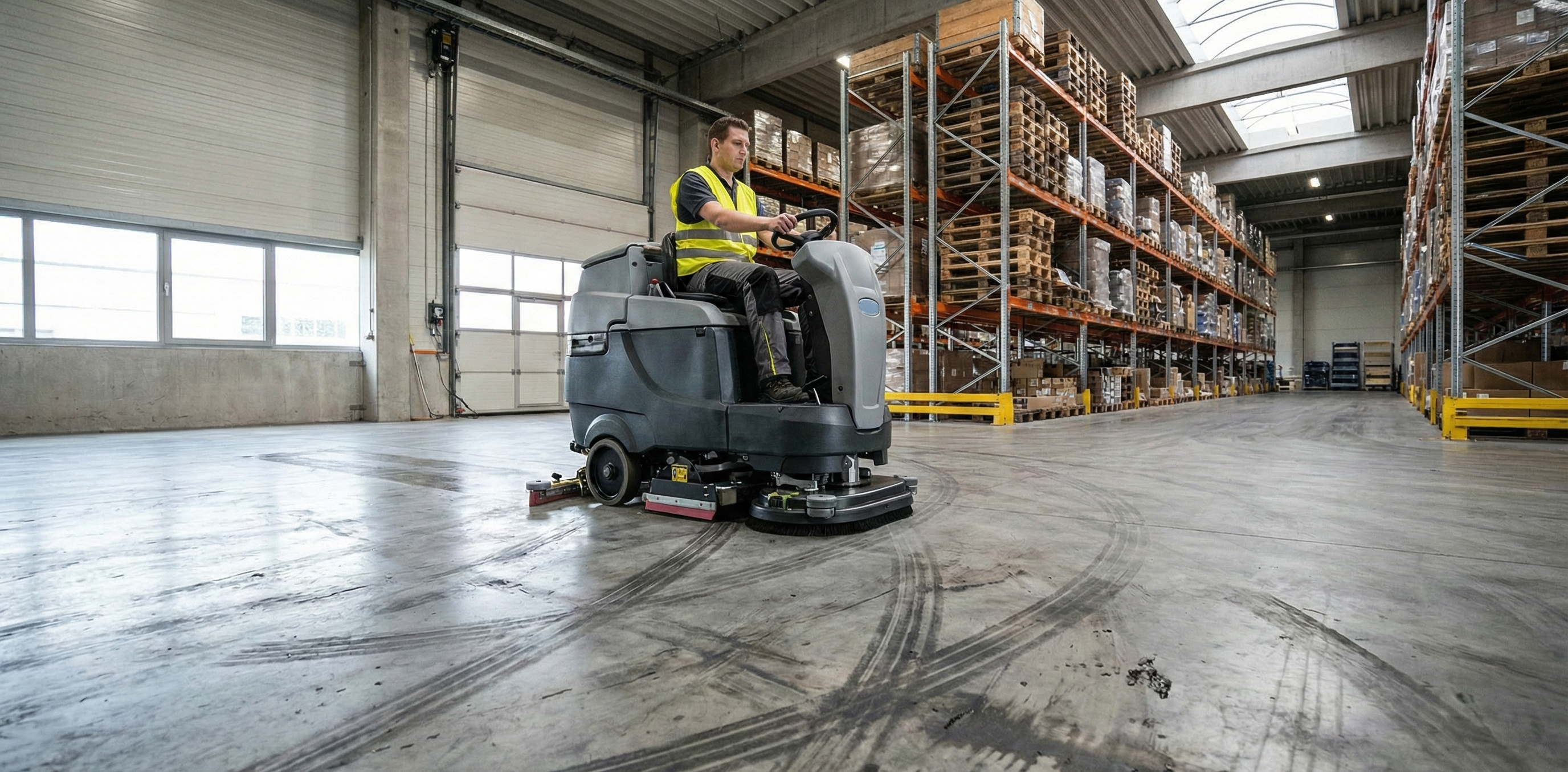
If you manage a warehouse, you know the sight: black, ugly streaks zig-zagging across your expensive Epoxy Floor Paint.
Forklift tyre marks are the bane of industrial cleaning. You can mop them. You can pressure wash them. You can scrub them until your arms ache. Usually, they don't budge.
That is because tyre marks are not dirt. They are rubber.
When a 3-ton forklift corners at speed, the friction heats up the tyres. This heat causes the rubber (and the plasticizers inside it) to essentially "melt" and fuse onto the surface of the floor coating. You aren't trying to clean a stain; you are trying to break a chemical bond.
Here is the industrial method for removing forklift tyre marks and heavy grease without stripping your paint.
The Chemistry: Why Soap Fails
Standard floor cleaners are designed for organic dirt (mud, food, dust). They are useless against burnt-on rubber or heavy axle grease.
To dissolve rubber residue, you need a high-alkaline cleaner or a solvent-based emulsifier. You need a dedicated Heavy Duty Industrial Degreaser or a Traffic Film Remover (TFR). These chemicals are designed to break the surface tension of hydrocarbons (oil and rubber) so they can be lifted.
Step 1: Spot Treatment
Don't try to clean the whole floor yet. Target the worst scuffs first.
- Apply Neat: Pour your Industrial Degreaser directly onto the black marks. Do not dilute it yet.
- The "Dwell" Time: This is the secret. If you scrub immediately, you are wasting your time. Walk away for 10-15 minutes. Let the chemical soften the rubber.
- Warning: Do not let it dry out. If it dries, the rubber re-bonds. Keep it wet.
Step 2: Mechanical Agitation
Once the rubber is soft, you need to physically lift it.
- Manual: For small areas, use a stiff deck scrub brush.
- Machine: For large warehouses, use a floor scrubber dryer fitted with a red (cleaning) or green (scrubbing) pad.
Caution: Do not use a black pad on a painted floor unless you know what you are doing - it is abrasive enough to sand the paint off.
Step 3: The Rinse
When you scrub grease, you create a dirty slurry. If you just squeegee that slurry around, you leave behind a slippery, rainbow-coloured film called a "grease haze."
You must extract the dirty liquid. If you don't have a wet-vac or a scrubber dryer, you must rinse the floor with clean, hot water and mop it up immediately. If the floor dries and feels slippery, you haven't rinsed it enough.
Prevention: Can You Stop Tyre Marks?
You can't stop forklifts from braking, but you can make the floor harder to mark.
-
Topcoat: Using a high-gloss, chemical-resistant finish like a Polyurethane Floor Paint creates a tighter surface that holds rubber less stubbornly than bare concrete or cheap acrylics.
-
Tyre Choice: If marks are a constant nightmare, switch your fleet to "non-marking" (white or grey) silica-compound tyres. They wear out faster, but they save thousands in cleaning costs.
Conclusion
A clean warehouse is a safe warehouse. Those black marks aren't just ugly; they are different textures to the rest of the floor, creating variable grip levels for machinery.
Don't ignore them until the annual audit. Attack them weekly with the right Degreaser and Cleaning Chemicals, and your floor will stay bright, safe, and professional.
Share:
Removing Black Spot Lichen: Why Pressure Washing Isn't Enough